

Number Games: Fast, Friendly Brain Workouts You Can Play Anywhere
Number Games turn simple digits into satisfying puzzles, clever strategy, and quick bursts of logic. Whether you enjoy tidy grids, mental math, pattern spotting, or time-based challenges, this category brings you a smooth mix of relaxing play and rewarding problem solving. Expect clean rules, clear goals, and that great moment when a solution clicks, all right in your browser with no complicated setup.
Classic Grid Puzzles (Sudoku, Kakuro, and Beyond)
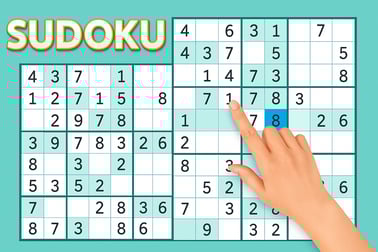
Grid-based Number Games are a favorite because they balance structure with creativity. In Sudoku-style puzzles, every placement feels meaningful because each number affects rows, columns, and regions. Kakuro and cross-sum variants add a light arithmetic layer, asking you to satisfy totals while keeping digits unique, which makes each move feel like a mini proof. These puzzles are ideal when you want a calm, focused session, because progress is visible and mistakes are easy to learn from. As difficulty rises, you start thinking in candidates, constraints, and patterns, which keeps your attention engaged without feeling overwhelming. If you like methodical play, look for options with pencil marks, hints, and difficulty filters so you can practice techniques like singles, hidden pairs, and clean elimination.
Mental Math Challenges and Speed Rounds
For players who love tempo, mental math Number Games turn calculation into a rhythm. You might be combining numbers to reach a target, choosing the best operation under time pressure, or chaining quick answers to build a streak. What makes this subgenre fun is the instant feedback loop: you try, you adjust, you get faster. It is not about being perfect at math, it is about building intuition, like recognizing factors, estimating quickly, and spotting shortcuts. Many games include modes for relaxed practice and timed sprints, so you can match your mood. If you enjoy competitive energy, leaderboards and daily challenges add a motivating structure, while still keeping the gameplay simple and approachable.
Pattern and Sequence Logic (Progressions, Tiles, and Streams)
Pattern-focused Number Games reward observation more than calculation. You might be identifying what comes next in a sequence, spotting symmetrical rules in a grid, or guiding numbered tiles through constraints to form a correct order. These games are excellent for players who like detective-style logic, because the best moves often come from noticing repetition, gaps, and relationships, not from doing heavy arithmetic. As you play, you develop a stronger sense of number behavior, like how parity shapes possibilities, how multiples cluster, or how a sequence can be driven by alternating rules. This subgenre is also great for short sessions because a single puzzle can be solved in minutes, yet still feels satisfying when the pattern finally becomes obvious.
Merge, Match, and Build (Combining Numbers Strategically)
Merge-style Number Games blend relaxation with planning. You typically combine equal values to create higher numbers, manage limited space, and decide whether to play for safe consistency or bold upgrades. The appeal is the steady sense of growth, because every merge upgrades your board and your options. Under the surface, there is real strategy: you are controlling where high values live, preventing blocks, and setting up future merges two or three moves ahead. Good play involves planning lanes, keeping your highest tile protected, and using the edges to reduce chaos. If you want a soothing puzzle that still makes you think, merge and match is one of the best ways to enjoy Number Games without feeling rushed.
Word and Number Hybrids (Cryptarithms and Code-Based Puzzles)
Some of the most satisfying Number Games combine logic, language, and deduction. Cryptarithms, for example, ask you to assign digits to letters so an equation works, which turns each constraint into a clue. Other code puzzles may involve converting between representations, uncovering hidden rules, or solving numeric ciphers with limited information. These games are perfect when you want a deeper, slower challenge that feels like a mystery you can unravel. The fun comes from building a chain of reasoning, checking consistency, and narrowing possibilities until only one solution remains. If you enjoy puzzles that make you feel clever, this subgenre delivers that rewarding, step-by-step discovery.
Daily Challenges and Progressive Difficulty
Daily and progressive Number Games are designed for routine and momentum. A short daily puzzle is easy to start, easy to finish, and surprisingly motivating, because a small win each day adds up. Progressive modes build skill naturally by introducing rules gradually, then increasing complexity as you become more comfortable. This structure is helpful for players who want to improve, because it turns practice into a journey rather than a one-off session. Many games also track stats like time, accuracy, and streaks, giving you gentle feedback without pressure. If you like measurable improvement, daily formats are a friendly way to stay engaged and sharpen your logic over time.
However you like to play, Number Games offer a clean mix of calm focus and clever strategy. Explore different subgenres, try a few difficulty levels, and pick a style that matches your mood, whether you want a quick warm-up or a longer logic session. Play in-browser, experiment with new puzzle types, and most importantly, enjoy the small wins that come from solving one more challenge.
FAQs About Number Games
What are the best tips for getting better at Number Games quickly?
Start with easier puzzles to learn the rule patterns, then practice consistency over speed. Use elimination first, keep notes or pencil marks when available, and review mistakes to understand what triggered them.
Can I play Number Games on mobile, tablet, and desktop?
Yes, most browser-based Number Games are designed to work on modern phones, tablets, and computers. Touch controls usually handle taps and drags smoothly, while desktop supports faster input and keyboard shortcuts in many puzzles.
Are Number Games suitable for kids and families?
Number Games are often family-friendly and can fit a wide range of ages. Younger players tend to enjoy matching and merge puzzles, while older players may prefer logic grids, sequences, and deeper deduction challenges.
How can I improve performance if a game feels slow in my browser?
Close unused tabs, update your browser, and disable heavy extensions for the session. If available, lower animation settings, switch to a lighter theme, or refresh the page to clear temporary issues.
Which Number Games are best for relaxing versus competitive play?
For relaxing play, choose grid puzzles, merge modes, or untimed logic challenges. For competitive energy, pick timed math rounds, daily leaderboards, or score-based modes where efficiency and streaks matter.