
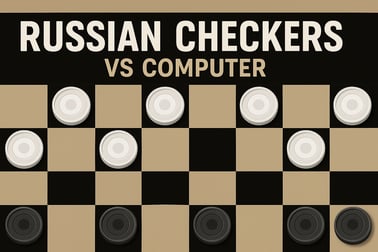
Checkers Games: Classic Strategy, Modern Speed, Instant Fun
Welcome to our collection of Checkers Games, where timeless board strategy meets quick, satisfying play you can enjoy anytime. Whether you love the calm rhythm of planning three moves ahead or the thrill of a sudden chain capture, this category delivers a clean, skill-forward experience with simple rules and deep decision-making. Expect smooth in-browser matches, smart practice options, and plenty of ways to sharpen your tactics across devices, from phones to desktops.
Classic Checkers (American Draughts)
Classic checkers is the foundation of the genre, built on straightforward movement, forced captures in many rule sets, and a steady race for promotion. In this style of Checkers Games, every piece matters because the board compresses quickly as trades happen, and one missed diagonal can flip the advantage instantly. Beginners love it because the basics are easy, move diagonally, capture by jumping, reach the far side to crown a king. Experienced players stick around because the depth is real: tempo control, spacing, and “quiet moves” that set traps without obvious threats. If you are practicing fundamentals, focus on keeping your back row intact early, centralizing pieces to increase mobility, and avoiding isolated checkers that can be surrounded. When the endgame arrives, king safety and opposition patterns become the difference between a clean conversion and a frustrating draw.
King Tactics and Endgame Mastery
Once kings enter the board, Checkers Games shift from a straightforward skirmish into a precise dance of angles and constraints. Kings move diagonally in both directions, which makes them powerful, but also exposes you to counterplay if you overextend. Strong endgame play often comes down to creating zugzwang-like positions where your opponent has only losing moves, or forcing a trade that leaves you with the last active king. A reliable approach is to simplify when you are ahead while keeping at least one king mobile to stop promotions. When you are behind, the comeback plan is usually to complicate: bait a capture sequence, split the opponent’s formation, and aim for a promotion race. The best players treat kings like pieces with jobs, one king blocks, one king hunts, and the rest support promotion lanes, rather than drifting aimlessly across the board.
Fast Matches, Quick Decisions (Blitz-Style Play)
Not every session needs a long, thoughtful duel. Many Checkers Games shine in fast formats where the clock pushes you to trust patterns and play confidently. Quick matches reward strong opening habits, safe structure, and the ability to spot forced captures instantly. Because checkers often includes mandatory jumps, blitz play is less about calculating every branching line and more about anticipating the capture geometry that the rules will enforce. You can improve quickly by learning a handful of opening setups that keep your pieces connected, then drilling common tactical motifs like double jumps, sacrifice-to-crown, and the “bridge” that protects a king. If you enjoy rapid play, look for smooth controls, clear highlighting of legal moves, and responsive performance that keeps the pace satisfying, even on mobile data.
Puzzles, Training Boards, and Skill Progression
Practice-focused Checkers Games add a rewarding layer: you can train specific skills instead of relying on random match outcomes. Puzzles teach you how to recognize forced sequences, when to sacrifice a piece to win position, and how to convert a material lead without giving counterplay. Training boards also help with pattern memory, you start seeing familiar shapes that signal a trap, a promotion race, or a winning net. A smart practice routine is to spend a few minutes on tactical puzzles, then play a short match to apply what you learned. Over time, you will notice your moves become cleaner: fewer accidental blunders, better piece coordination, and calmer endgame decisions. If you are new, start with basic capture puzzles. If you are experienced, focus on endgame studies with kings, where one mistake can turn a win into a draw.
Modern Variations and Rule Options
One reason Checkers Games stay fresh is the variety of rule options and regional styles that change the feel without changing the heart of the game. Some versions emphasize forced captures, while others allow more freedom and strategic maneuvering. You may also find boards and movement rules inspired by international draughts, which can introduce different pacing and more complex promotion dynamics. Variations are perfect if you enjoy learning new patterns, because openings, trade values, and endgame plans can shift dramatically. If you like a pure, classic experience, stick to standard rules. If you want a new challenge, try a variant that changes capture priority, promotion behavior, or starting positions. These options let you tailor difficulty and replay value, making the category welcoming for casual players and genuinely interesting for strategy fans.
However you like to play, our Checkers Games are designed for easy access and real improvement. Start with a classic match, experiment with faster rounds, and return to puzzles when you want to level up. Play in your browser, learn a few new tactics, and enjoy the satisfying moment when a plan comes together and your king seals the win.
What are the best tips for winning at checkers?
Prioritize piece connection, control the center, and avoid early trades that open promotion lanes for your opponent. Watch for forced jumps, set up multi-capture sequences, and aim to crown a king while keeping your back row protected until it is safe to advance.
Can I play Checkers Games on mobile and tablet?
Yes, most modern browser-based checkers experiences are built to run smoothly on phones, tablets, and desktops with touch-friendly controls and responsive layouts, so you can play without installing anything.
Are Checkers Games suitable for kids and families?
Checkers is easy to learn, turn-based, and visually clear, making it a great fit for kids, families, and classrooms. Younger players can start with basic movement and capturing, then grow into strategy over time.
Why do some matches feel slow or laggy in the browser?
Performance can depend on device memory, open background tabs, and network conditions. For smoother play, close extra tabs, refresh the page, and use an updated browser. Lightweight games typically run well even on older devices.
Which is better for improving, puzzles or full matches?
Both help, but puzzles build fast tactical recognition, while full matches develop planning and endgame technique. A balanced approach works best: solve a few puzzles, then play short matches to apply the patterns under real conditions.