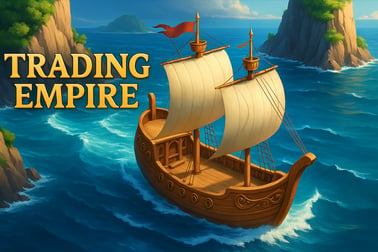
Trading Empire lets you build a medieval trade network, manage caravans and ships, and use diplomacy to outsmart rival merchants in your browser.


























Trading Empire
Overview of Trading Empire
Trading Empire is a medieval trade strategy game that puts you in charge of a growing merchant dynasty. Instead of commanding armies, you build a trading empire through smart deals, efficient logistics, and clever diplomacy. Every city has its own production, demand, and political quirks, and your job is to read the market, move goods at the right time, and outmaneuver rival merchants.
If you enjoy a deep merchant tycoon simulator with careful planning, risk management, and long-term growth, Trading Empire is built around exactly that loop. You start small with a single caravan or ship, slowly expand your trade routes, then secure guild privileges and city bonuses that let you dominate entire regions. It plays like a blend of business management sim online and grand strategy, all focused on trade and diplomacy gameplay rather than warfare.
The setting is firmly in the Medieval era: grain flows from fertile heartlands, luxury items come from distant ports, and every route you open can become a lifeline or a liability. As your prestige climbs, city leaders start to notice you, opening doors to special contracts, tax amnesties, cheaper port fees, and exclusive warehouse access that turn a modest business into a powerful trading empire.
Basic Rules & Mechanics
Trading Empire keeps its core rules approachable while offering a lot of depth for optimization. Here are the main systems you’ll interact with in this medieval trade strategy game:
Starting as a Merchant
You begin by creating a merchant and choosing a starting city. That city defines your first opportunities: what’s produced locally, what’s scarce, and which nearby cities are reachable by land or sea.
- Capital: You start with limited gold, so every early purchase matters.
- Transport: Buy your first caravan or ship, or temporarily rent transport if permanent vehicles are too expensive.
- Initial Goods: Pick low-risk staples first (like grain or wood) before gambling on expensive luxury goods.
Buying Low, Selling High
At its heart, Trading Empire is about spotting price gaps between cities and exploiting them efficiently.
- Supply & Demand: Cities that produce a good sell it cheaper; cities that lack it pay more.
- Dynamic Prices: Prices shift over time based on trade volume, events, and city needs.
- Prestige Impact: Fulfilling city demands improves your prestige there, unlocking better deals and guild options.
Prestige and Influence
Your reputation is just as important as your coin.
- Prestige: Earned by consistently meeting a city’s needs and completing special requests.
- Influence: A higher standing lets you negotiate tax reductions, lower port fees, and warehouse discounts.
- Guilds: With enough prestige, you can establish guilds that give you long-term control over local trade.
All of these mechanics work together to create a rich merchant tycoon simulator, where every decision has a ripple effect on your trading network.
Trading Empire Features
Trading Empire includes a range of features that make it stand out as a deep but accessible business management sim online. Here are some of the key systems and options you can expect:
- Pure Trade-Focused Gameplay: No armies or castles here — it’s all about trade, logistics, and negotiation.
- Caravans and Ships: Two core transport types, each with unique costs, speeds, and risk profiles.
- City-Specific Economies: Every city has unique production chains and demand patterns.
- Prestige and Guilds: Climb from unknown trader to influential guild master.
- Dynamic Rivals: Competing merchants try to claim routes, undercut your prices, and win city favor.
- Diplomatic Deals: Secure tax amnesties, port fee reductions, and special trade privileges.
- Flexible Progression: Grow wide with many routes or go tall and dominate a few key cities.
This blend of trading and diplomacy gameplay creates a satisfying loop: discover an opportunity, set up the route, negotiate a better deal, then reinvest into faster vehicles and more ambitious ventures.
Where to Play Trading Empire
Trading Empire is designed as a PC-first medieval trade strategy game and is available on popular digital distribution platforms that support indie strategy and simulation titles. For the best experience, play it on a modern desktop or laptop with a stable internet connection, so you can enjoy frequent updates, balance tweaks, and quality-of-life improvements.
If you’re playing through a browser gaming platform, you’ll typically access Trading Empire directly from your web browser:
- No installation required: Simply open the game page, wait for it to load, and you’re ready to play.
- Cross-device access: Sign into your account from different PCs and continue your saved progress if cloud saves are supported by the platform.
- Regular updates: Browser-based releases often get updates seamlessly in the background.
Always launch Trading Empire from a reputable store or official partner platform. Avoid unofficial downloads or modified clients — they can be unsafe and are not supported by the developer.
Is Trading Empire Safe to Play?
Trading Empire is a family-friendly business management sim online that focuses on economics, planning, and diplomacy instead of violence or graphic content. It’s suitable for players who enjoy strategy and numbers-based gameplay, including teens and adults.
To keep your experience safe:
- Use official platforms: Play only via trusted stores or recognized browser portals.
- Avoid third-party cheats or mods: These can include malware or compromise your account.
- Online interactions: If chat or leaderboards are enabled, follow community guidelines and mute or report disruptive users when needed.
Because Trading Empire is centered around trade and diplomacy gameplay, the content is largely about economics, negotiation, and city management, making it a safe strategy option for most players interested in a medieval trade strategy game.
How to Build a Profitable Medieval Trade Network
Success in Trading Empire comes from building a well-structured trade network, not just running random routes. Think like a logistics planner in a merchant tycoon simulator.
Step 1: Scout Production and Demand
Open the map and inspect each city’s specialties:
- Production hubs: Cities that generate large amounts of raw materials (grain, wood, wool, ore).
- Crafting centers: Towns that refine those resources into higher-value goods (cloth, tools, weapons, luxury items).
- Consumer markets: Dense urban centers that demand a broad variety of goods but produce little themselves.
Identify a triangle like raw materials → processed goods → rich buyers. That triangle can form the backbone of your early trading empire.
Step 2: Start with Simple, Short Routes
Early on, gold is tight and your fleet is small. Focus on:
- Short distances: Faster trips mean quicker returns and less exposure to random events.
- High-volume staples: Cheap goods with high demand are safer than niche luxury items at the start.
- Reliable profits: Look for price differences that stay stable over several trips.
Once a route proves consistently profitable, you can assign a dedicated caravan or ship and let that lane become a reliable income source.
Step 3: Layer and Diversify
After you’ve built one or two solid connections, start to layer your network:
- Add secondary goods to existing routes to fill leftover cargo space.
- Extend routes by one extra city if it doesn’t dramatically increase travel time.
- Open specialty routes for high-value items once you can afford occasional losses.
This approach turns a handful of simple trades into a complex but highly profitable medieval trade strategy game network that’s resilient to price swings and market changes.
Managing Caravans and Ships for Maximum Profit
Vehicles are the arteries of your trading empire. Managing caravans and ships efficiently can be the difference between scraping by and becoming a dominant merchant tycoon.
Caravans vs. Ships
- Caravans: Ideal for inland trade, shorter routes, and cities without ports. They’re usually slower but safer from large-scale piracy.
- Ships: Faster travel between port cities, great for long-distance, high-value routes. They may come with higher maintenance and port fees.
A balanced network uses caravans to feed coastal hubs and ships to move bulk goods between major ports.
Optimizing Routes and Capacity
For maximum profit:
- Reduce empty runs: Always try to carry something valuable both ways, even if one direction is more profitable.
- Match cargo to capacity: High-value, low-volume goods are great for smaller, faster transports; bulk staples suit larger, slower vehicles.
- Upgrade smartly: Prioritize upgrades for routes with the best profit margins or critical bottlenecks.
Think of every caravan or ship as an investment. If a vehicle isn’t paying for itself quickly, reroute it or reassign its cargo.
Automation and Micro-Management
As your trading empire grows, micromanaging every trip becomes impossible:
- Use automated routes for stable, proven lanes.
- Reserve manual control for volatile markets, rare goods, and experimental routes.
- Regularly review performance and tweak underperforming routes or vehicles.
This layered approach keeps your network efficient while letting you focus on high-impact strategic decisions.
Diplomacy, Guilds, and Growing Your Trading Empire
Pure buying and selling will get you started, but long-term dominance in this medieval trade strategy game depends on diplomacy and guild influence.
Using Diplomacy to Cut Costs
As your prestige grows in a city, you can approach its leaders for special terms:
- Tax amnesties: Temporarily reduce or waive trade taxes.
- Port fee reductions: Lower costs every time your ships dock.
- Warehouse privileges: Store more goods at lower cost or gain priority access.
These deals directly raise your profit margins and make it harder for rivals to compete on price.
Founding and Expanding Guilds
Guilds are the backbone of a lasting trading empire:
- Open a guild once your prestige in a city is high enough.
- Gain direct access to local markets, often letting you sell to the population at better rates.
- Unlock guild-specific bonuses that improve your logistics, pricing, or influence.
Spread your guild presence across multiple cities to create a web of influence that rivals can’t easily challenge.
Outplaying Rival Merchants
Rivals compete for the same lucrative routes you do. To stay ahead:
- Use your prestige and guilds to secure exclusive privileges.
- Diversify so losing one profitable route doesn’t cripple your income.
- Respond to competition by shifting cargo toward markets where you still have an edge.
This mix of trading and diplomacy gameplay makes every diplomatic choice part of your long-term economic strategy.
City Production, Demand, and Prestige Explained
Understanding how cities work is crucial to mastering this merchant tycoon simulator. Each settlement is a mini-economy with its own rules.
Production Chains
Most cities are part of one or more production chains, for example:
- Farms → Grain → Bakeries → Bread
- Forests → Wood → Workshops → Tools
- Sheep → Wool → Weavers → Cloth
By studying these chains, you can position yourself at the most profitable links, usually where raw materials become processed goods.
Demand and Special Requests
Cities constantly need certain goods:
- Base demand: Everyday items that keep prices stable and predictable.
- Event-driven demand: Temporary surges caused by shortages, festivals, or local projects.
- Government contracts: Special orders from city authorities that pay extra and boost prestige.
Fulfilling large or urgent demands quickly is one of the fastest ways to increase prestige.
Prestige and its Rewards
Prestige is your standing with a city. As it rises, you unlock:
- Better trade terms and improved base prices.
- Access to guilds and exclusive trade rights.
- Powerful diplomatic options that make your operations cheaper and safer.
In a game built around trade and diplomacy gameplay, prestige effectively becomes another resource to invest in and profit from.
Beginner Tips to Dominate the Medieval Trade Map
If you’re new to Trading Empire or to this style of medieval trade strategy game, these tips will help you get off to a strong start:
- Start small, think big: Focus on one or two reliable routes, then gradually expand.
- Prioritize safety early: Short, low-risk routes are better than long, risky paths when you’re low on gold.
- Watch your expenses: Port fees, taxes, and maintenance can quietly eat into profits. Use diplomacy to reduce them as soon as possible.
- Chase prestige, not just profit: High-prestige cities open doors to guilds and exclusive advantages that pay off more over time.
- Balance manual and automated routes: Let automation handle your most stable lanes so you can personally manage new or high-risk ventures.
- Review the map often: Markets change. Regularly check for new price gaps, shortages, or events you can exploit.
- Don’t overextend: Expanding too fast with underused caravans or ships can drain your gold. Grow in step with your income.
By combining solid route planning, smart vehicle management, and careful use of diplomacy and guilds, you’ll steadily build a trading empire that stretches across the entire map and outclasses every rival.
Frequently Asked Questions
What is Trading Empire?
Trading Empire is a browser-based medieval trade strategy game where you manage merchants, trade routes, and diplomacy to build a powerful commerce empire.
Is Trading Empire free to play?
Yes, Trading Empire is free to play in your browser. Some platforms may offer optional upgrades or cosmetic purchases, but the core game is accessible for free.
Do I need to download anything to play?
No download is required. You can play Trading Empire directly in a modern web browser with a stable internet connection.
Is Trading Empire suitable for kids?
Trading Empire is family-friendly. It focuses on trading, resource management, and strategy without graphic violence or inappropriate content.
Can I play Trading Empire on mobile?
Trading Empire can be played on most up-to-date mobile browsers. For the best experience, use a tablet or a phone with a larger screen in landscape mode.